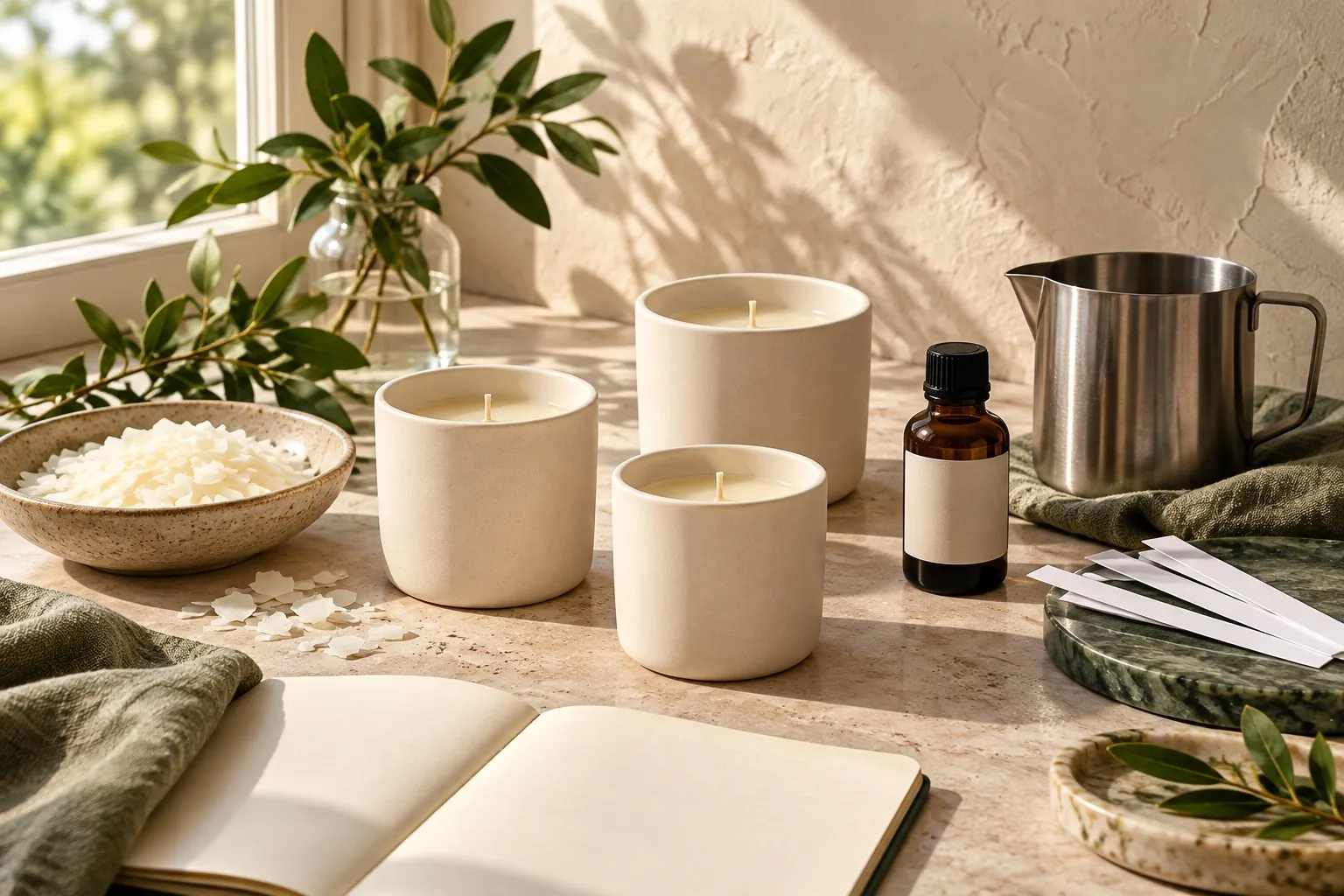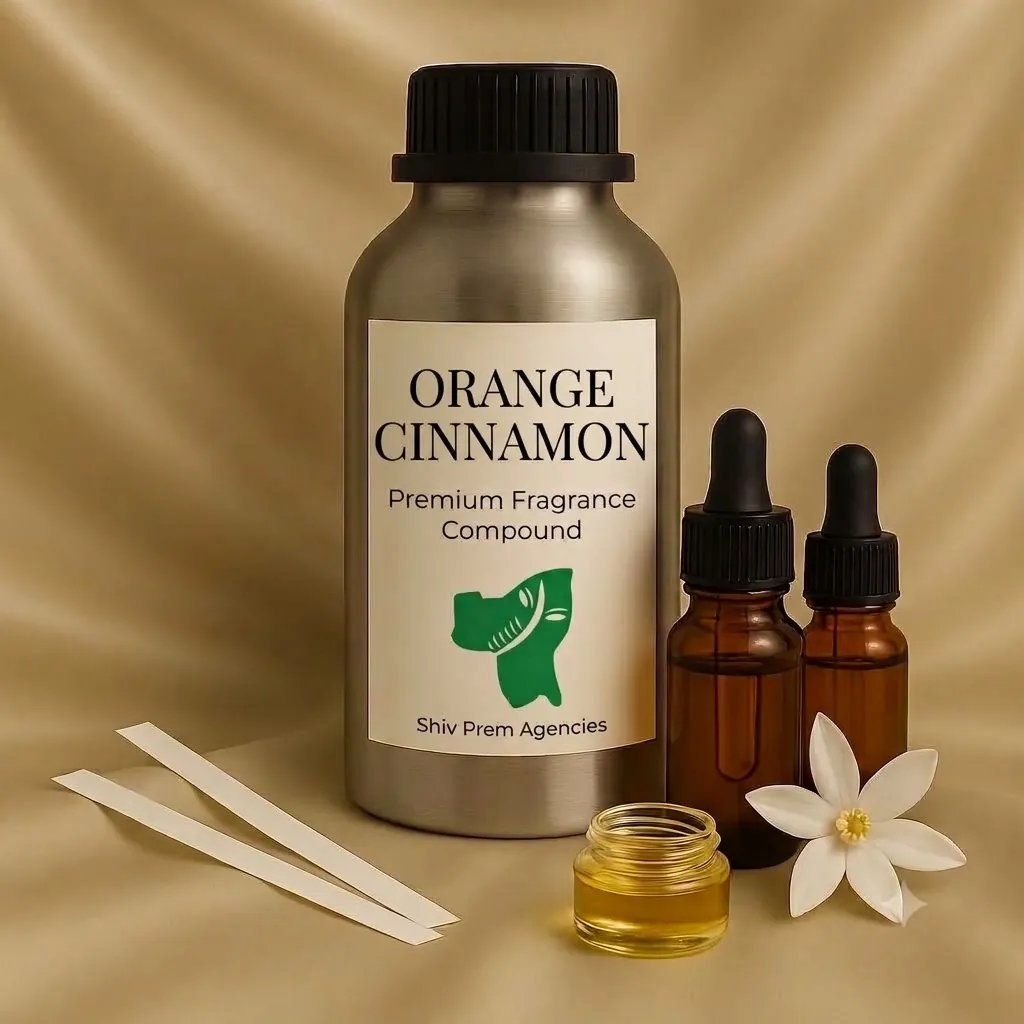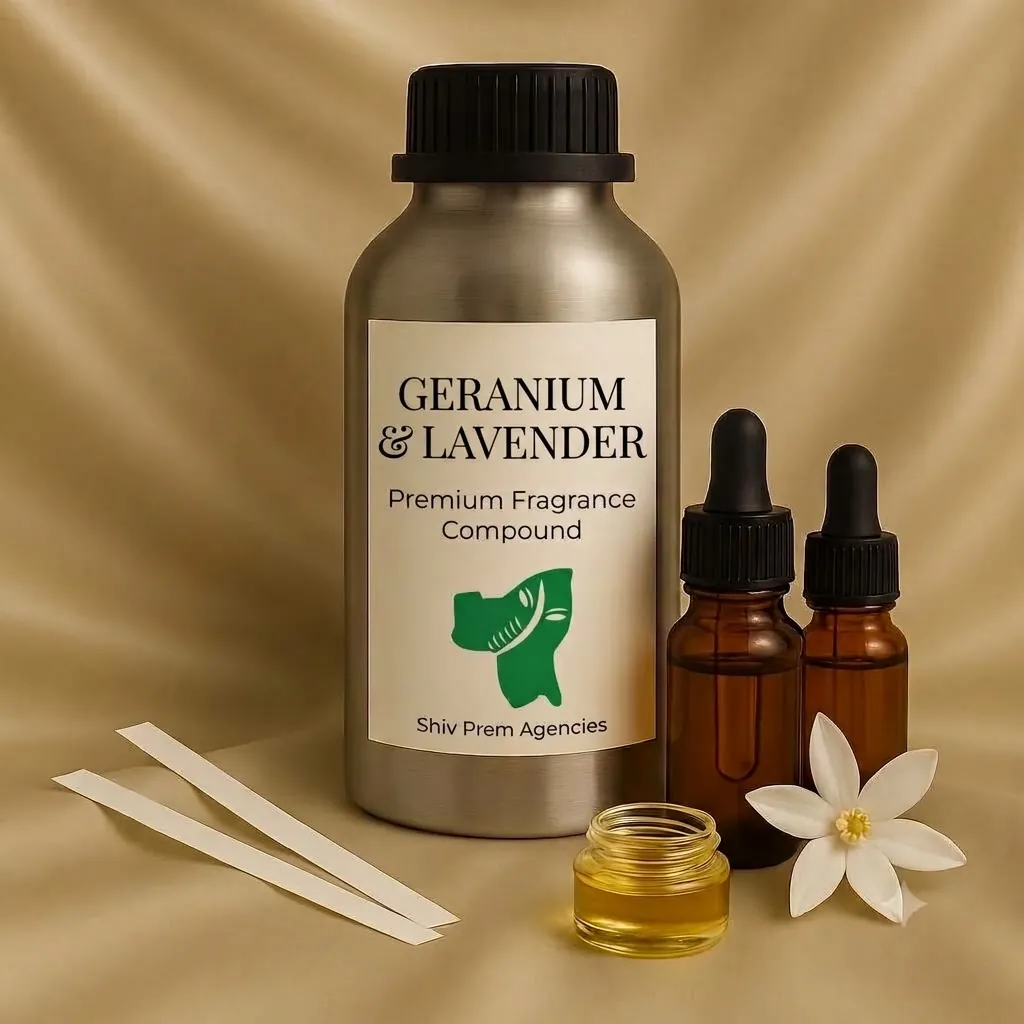
How to make the most of seven fragrance samples
A sample box is most useful when it answers a question. Give each fragrance a place in your plan, and those seven small bottles can help you choose what to develop next.
Choose a question for your sample box
Are you choosing the first scent for a candle brand, comparing two floral directions, or finding an alternative for a future collection? Write that question at the top of your worksheet before opening the samples.
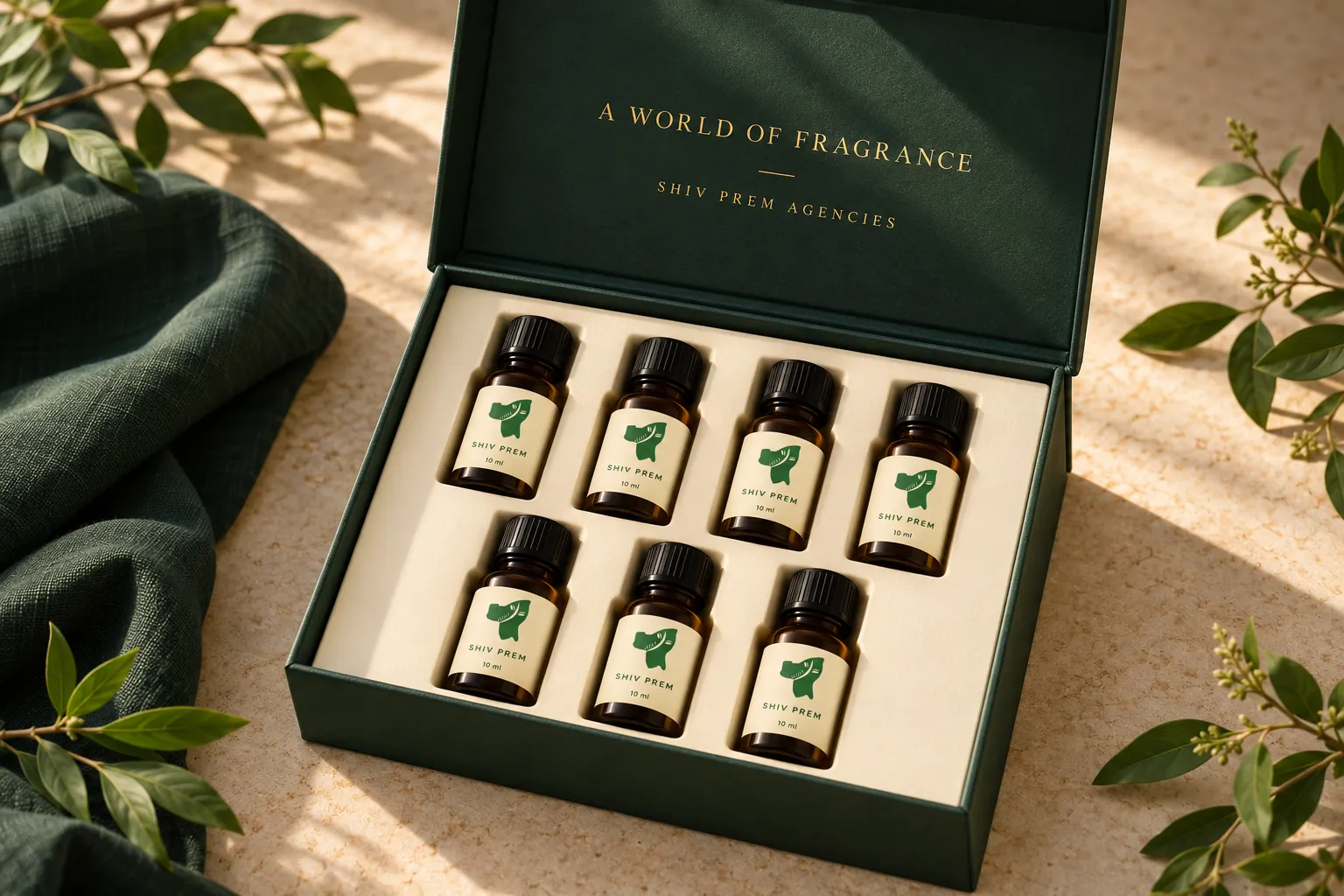
For a broad first exploration, you could assign your seven slots as follows: two familiar styles, two styles you want to understand better, two directions that fit your planned collection and one unexpected choice. This is an editorial starting point; your application and supplier’s availability should guide the actual selection.
The Shiv Prem fragrance sample box offers seven 10 ml samples for ₹899.10. Check the product page for the current selection and order details. Keep the labels attached and record the product names exactly as supplied.
Prepare one scorecard for every sample
Use the same questions for all seven so the final comparison is fair. Keep “how much I like it” separate from “how well it fits my project.” A personal favourite does not have to become the lead scent in every collection.
| Field | Your note |
|---|---|
| Sample code | A–G, plus the full supplier product code |
| First impression | Three simple words, in your own language |
| Character over time | What feels different on a later assessment? |
| Fit with the brief | Strong fit / possible / another project |
| Question for the supplier | Application, documentation or pack details |
| Next action | Shortlist / revisit / set aside |
Evaluate in stages, without rushing the shortlist
Use the supplier’s handling guidance and appropriate evaluation materials. Blotter strips offer a way to compare a fragrance away from the bottle, but they cannot establish how it will perform in your final product. CandleScience explains the distinction in its fragrance evaluation guide ↗︎.
Try recording your description before reading the scent name again. You may notice a softer, fresher or warmer character than the name led you to expect. That observation is useful: it tells you how you might describe the finished product in your own voice.
Limit each comparison to a manageable number of samples. Leave space in the worksheet for a later assessment, rather than treating the first impression as the final answer. Keep each sample and its evaluation materials clearly separated and labelled.
Turn the shortlist into a trial plan
Choose the candidates you can explain clearly: what fits, what remains uncertain and what you want to test. For candles, record the wax, wick, vessel and fragrance weights in your plan. For another application, ask for guidance specific to that application rather than copying a candle formula.
Since samples are sold by volume, weigh the oil used in a weight-based recipe. The amount of test material you can make depends on the measured oil and your validated formula. Read the fragrance load guide for the arithmetic.
Small samples help with selection. If your development needs several prototypes or repeated tests, ask about the next suitable pack size before committing to production quantities.
Make the next order easy to repeat
Save a short decision sheet: selected product code, what it is for, sample batch if available, planned quantity and any questions still open. Send the same sheet with a wholesale enquiry so the supplier knows which fragrance you mean.
Keep the sample records after ordering. They explain how the decision was made and give you a starting point when developing the next collection. Over time, the notes become your own fragrance library.
Use the samples to answer a clear question, then keep the exact product codes with the decision.