Candle fragrance load: the maths, made simple
The same percentage can produce two different recipes if you have not said what it is a percentage of. Start with the calculation basis, then weigh the ingredients.
First, decide what your percentage means
For the calculator below, fragrance load means fragrance weight as a percentage of wax weight. If your wax weighs 100 g, a mathematical 6% load means 6 g of fragrance and 106 g of combined material. The example explains the arithmetic; 6% is not a usage recommendation for every oil or wax.
A percentage of the finished batch uses a different denominator. Six grams of fragrance in 106 g of finished material is about 5.66% of that total. Write the basis beside every percentage in your notebook, supplier email and production sheet.
When checking a fragrance document, follow its stated basis. IFRA describes its quantitative restrictions in relation to the finished consumer product, so a wax-based formula may need converting before comparison. IFRA guidance on concentrations ↗︎
Your fragrance load calculator
Enter your own validated percentage. This tool calculates weights only; it does not determine whether a formula is suitable or safe.
For 500 g of wax at 6% of wax weight:
- Wax
- 500 g
- Fragrance
- 30 g
- Combined weight
- 530 g
Fragrance is 5.66% of the combined weight.
Example values are for arithmetic, not a recommended recipe. Check your wax instructions and fragrance guidance before making a batch. Use a scale appropriate to your batch size.
Keep these two formulas in your notebook
When you already know the wax weight
For example, 500 g of wax at a mathematical 6% load uses 30 g of fragrance. The combined weight is 530 g. This is useful when you have already weighed a quantity of wax.
When you know the combined fill weight
Then subtract the wax weight from the combined weight to find the fragrance weight. For a 530 g combined batch at 6% of wax weight, you need 500 g of wax and 30 g of fragrance. The calculator rounds the displayed results to two decimal places.
These formulas cover wax plus fragrance only. Dyes, additives, handling losses and leftover material need their own entries in a more detailed production sheet.
A 10 ml sample is not automatically 10 g
Millilitres describe volume; grams describe mass. Converting between them requires the oil’s density. Weigh the fragrance you actually dispense instead of assuming that a 10 ml bottle contains exactly 10 g.
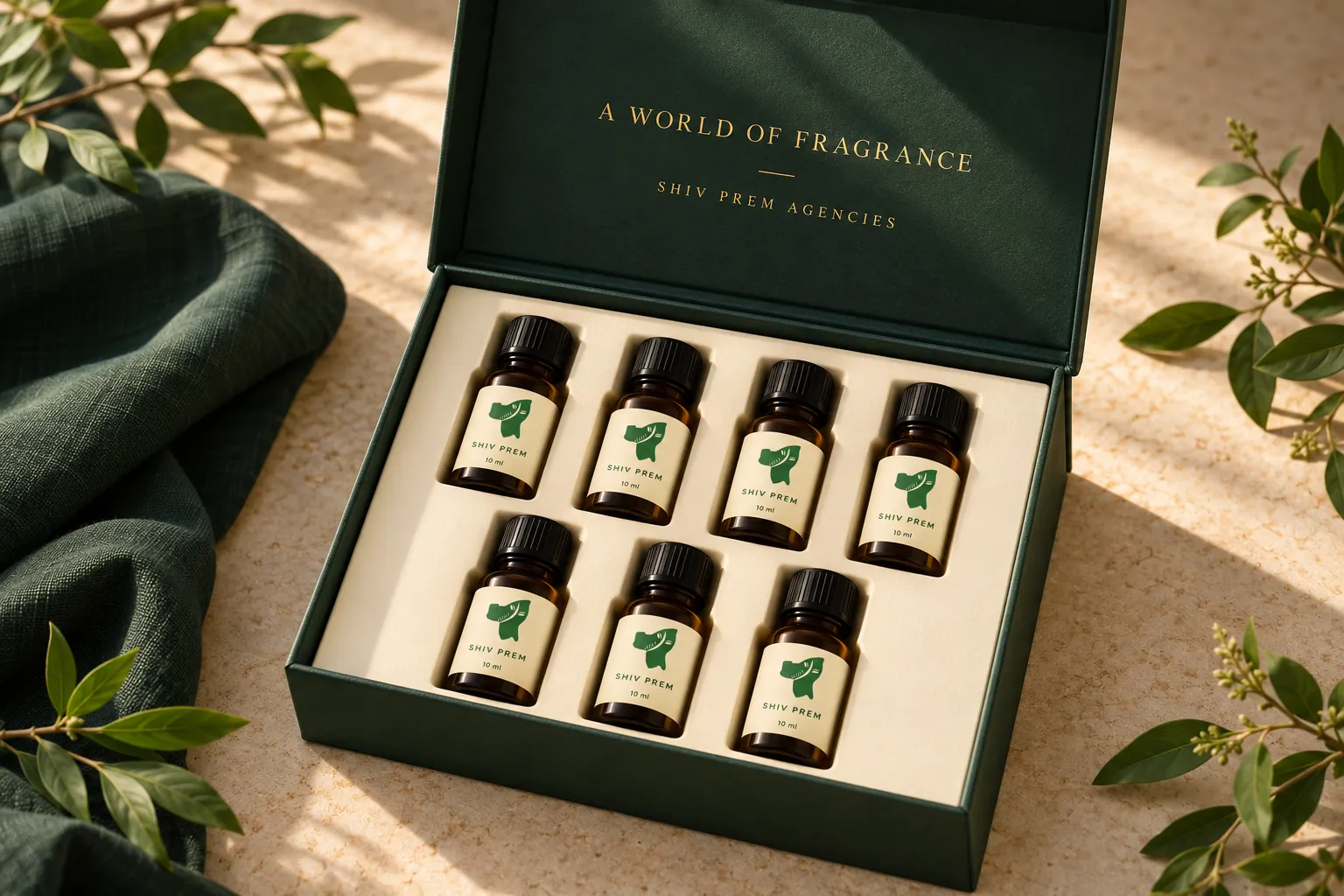
That is especially useful when planning with the seven-fragrance sample box. First measure the usable material, then plan an appropriately sized trial using the instructions for your wax and oil. A sample bottle may not cover every test needed for a final candle.
Label the units in every column of your worksheet. “Oil: 30 g” is harder to misread than “Oil: 30.” A tare check before weighing also helps prevent the container weight from entering your ingredient total.
Make your calculation repeatable
- Write down the calculation basis: percentage of wax weight or finished weight.
- Record actual measured weights, not only intended weights.
- Include product and batch codes for the wax and fragrance.
- Record any loss during transfer separately from the formula.
- Keep each tested version rather than overwriting the previous one.
The percentage is one part of a candle formula. Wax, wick, vessel and manufacturing instructions still matter. For the next step, read our guide to evaluating cold and hot throw.
Always write the denominator: a percentage of wax weight and a percentage of finished weight are different calculations.